
Project Description
Dental Crowns & Bridges in Medford, NJ at Stiles Dental Care
A fractured tooth, extensive decay, or a missing tooth affects more than appearance. It changes how your bite functions, how pressure distributes across surrounding teeth, and how stable your smile remains over time. At Stiles Dental Care, our approach to dental crowns & bridges is centered on structural durability, precise fit, and long-term function.
These restorations reinforce weakened teeth, replace gaps caused by tooth loss, and prevent nearby teeth from drifting out of alignment. Every case in our Medford office is evaluated for bite harmony, gum health, and long-term performance, not short-term cosmetic improvement.
What Is the Difference Between a Crown and a Bridge?
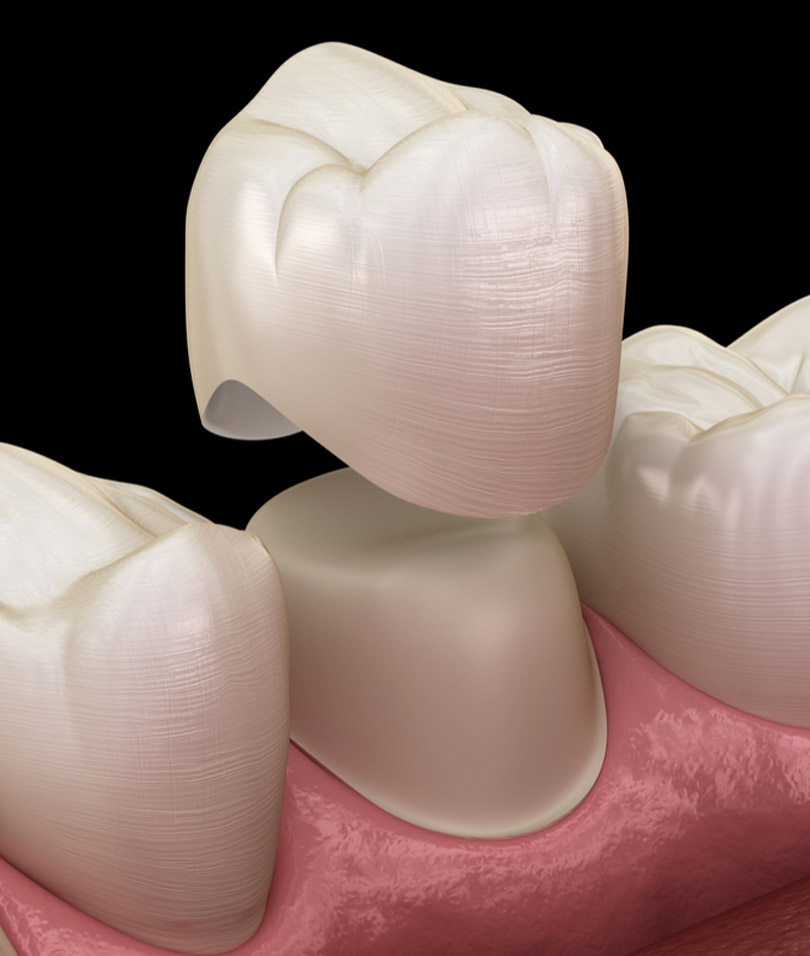
A crown restores a single damaged tooth that is still present. It covers the tooth completely, reinforcing the remaining structure and protecting it from further fracture.
A bridge replaces one or more missing teeth. It anchors an artificial tooth, sometimes called a pontic, to adjacent abutment teeth or implants. The goal is to restore chewing stability and maintain alignment.
The correct solution depends on whether natural tooth structure remains viable and whether surrounding teeth are strong enough to support a restoration.
What Are the Benefits of Dental Crowns & Bridges for Restoring My Smile?
Dental crowns & bridges restore structural integrity, chewing efficiency, and natural appearance. A crown strengthens a compromised tooth, reducing the risk of fracture and preserving long-term function. A bridge fills the space created by tooth loss, preventing adjacent teeth from shifting and helping maintain balanced bite forces.
Beyond aesthetics, these restorations improve speech clarity, reduce uneven strain on surrounding teeth, and support facial structure by preserving alignment. When precisely fabricated, dental crowns & bridges blend seamlessly with natural teeth and provide predictable, durable stability.
Why Full Coverage Is Critical After Structural Damage
When a tooth loses significant enamel and internal structure due to decay, fracture, or root canal therapy, the remaining cusps become more vulnerable under normal bite pressure.
Clinical evidence available through the National Library of Medicine (https://www.ncbi.nlm.nih.gov) and PubMed (https://pubmed.ncbi.nlm.nih.gov) supports the use of full-coverage restorations for structurally compromised teeth. A permanent crown redistributes occlusal forces evenly across the surface of the tooth, reducing the risk of catastrophic fracture.
Partial repairs may not provide adequate reinforcement when structural loss is extensive.
When Is a Permanent Crown Recommended?
A permanent crown may be recommended when a tooth can no longer reliably hold a filling, when advanced decay has removed substantial structure, when a crack threatens complete fracture, or when root canal treatment has left the tooth brittle.
During your first appointment, Dr. Stiles evaluates structural integrity, bite force distribution, and surrounding gum health. If reinforcement is necessary to prevent further damage, the dental crown procedure is carefully planned to restore strength and stability.
Same-Day CEREC® Crowns at Stiles Dental Care
Dr. Stiles offers CEREC® CAD/CAM technology, allowing many crowns to be designed, milled, and placed in a single visit. Using digital imaging and computer-guided design, a custom ceramic restoration is fabricated on-site within minutes.
This eliminates traditional impressions and temporary crowns in many cases, making same-day treatment more convenient while maintaining accuracy.
However, not every situation is ideal for single-visit fabrication. Teeth subjected to high bite forces or requiring specialized materials such as zirconia may benefit from laboratory-fabricated restorations. At Stiles Dental Care, treatment decisions are based on structural demands rather than convenience alone.
Are Same-Day Crowns as Durable as Traditional Dental Crowns?
Same-day ceramic restorations are highly durable for appropriately selected cases. They provide excellent strength and esthetics for many teeth, especially when adequate enamel support remains.
Traditional lab-fabricated crowns may offer expanded material options, including zirconia or porcelain-fused-to-metal, which can provide additional fracture resistance in high-pressure areas. The choice between same-day and laboratory fabrication depends on bite force, tooth location, and long-term durability requirements.
When Is a Traditional Bridge the Right Solution?
A traditional bridge is appropriate when one or more teeth are missing in sequence and adjacent teeth are healthy enough to serve as anchors.
Before recommending bridgework, we evaluate periodontal stability, bone support around abutment teeth, the presence of untreated decay, and occlusal force distribution. A bridge should only be placed on a stable biological foundation to ensure long-term success.
Replacing a missing tooth promptly helps prevent shifting of nearby teeth and uneven pressure distribution across the bite.
Types of Dental Crowns and Materials Used
There are several types of dental crowns available, each selected based on strength requirements and cosmetic goals.
Porcelain crowns and ceramic crowns are commonly used for visible teeth because they closely mimic natural translucency and color.
Zirconia is frequently chosen for back teeth due to its high fracture resistance and durability under heavy chewing forces.
Porcelain-fused-to-metal combines a strong metal substructure with a natural-looking outer layer.
Full metal alloys, including gold-based restorations, offer exceptional longevity in areas where strength is the primary concern.
Material selection for dental crowns & bridges is based on occlusal load, tooth position, and long-term functional demands.
What Materials Are Commonly Used for Dental Crowns and Bridges?
Common materials for dental crowns & bridges include all-ceramic, zirconia, porcelain-fused-to-metal, and full metal alloys. Ceramic materials are favored for their natural appearance and ability to blend with surrounding teeth.
Zirconia offers high strength and is often used in posterior regions where chewing forces are greater. Porcelain-fused-to-metal provides durability with improved esthetics, while metal alloys deliver unmatched longevity in high-pressure areas.
At Stiles Dental Care, material recommendations are made after evaluating bite alignment, gum health, and structural stability to ensure predictable long-term results.
Types of Dental Bridges Available
Bridge designs vary depending on structural needs. A traditional bridge is anchored to adjacent teeth. An implant-supported bridge relies on a dental implant when neighboring teeth cannot provide adequate support. Cantilever bridges are used selectively in limited clinical situations.
The appropriate type depends on bone levels, periodontal health, and restorative planning considerations.
Comprehensive Restorative Evaluation Before Dental Crowns & Bridges
Before placing dental crowns & bridges, Dr. Stiles performs a comprehensive restorative evaluation. This includes digital imaging, bite analysis, and assessment of surrounding teeth and gum tissue.
If active gum disease or untreated decay is present, those conditions are addressed before restoration placement. Long-term success depends on the health of supporting structures as much as the restoration itself.
This systematic approach helps ensure stability and reduces the risk of complications.
How the Dental Crown Procedure Works
The dental crown procedure generally involves two stages unless same-day CEREC fabrication is appropriate.
During the first visit, the tooth is reshaped, and impressions are captured. If laboratory fabrication is selected, a temporary restoration protects the area while the final crown is created.
At the second visit, the temporary crown is removed, and the new crown is permanently secured. Fit, margin accuracy, and bite alignment are carefully verified.
How the Dental Bridge Procedure Is Performed
The dental bridge procedure also involves preparation and impression capture during the first appointment. Temporary crowns protect prepared teeth while the final bridge is fabricated.
At the second visit, the completed bridge, including the artificial tooth, is bonded into place. Occlusion and contact points are adjusted to ensure comfortable function.
Will Getting a Dental Bridge Affect How I Eat or Speak?
Most patients adapt quickly to a new bridge. Once bite stability is restored, chewing function improves significantly. Mild sensitivity may occur initially, but it typically resolves as the surrounding tissues adjust.
Speech clarity often improves when a gap from a missing tooth is replaced, particularly in front-tooth areas. A properly fitted bridge feels natural and does not interfere with everyday communication.
What Happens If a Missing Tooth Is Not Replaced?
Leaving a missing tooth untreated allows nearby teeth to drift into the empty space. This can alter bite mechanics and create areas that are more difficult to clean.
Over time, misalignment increases uneven pressure distribution and may contribute to additional restorative needs. Replacing the space with properly fitted dental crowns & bridges helps preserve alignment and stability.
Factors That Influence the Lifespan of Dental Crowns & Bridges
The longevity of dental crowns & bridges depends on multiple factors, including bite force, grinding habits, material selection, and oral hygiene practices.
Research published in The Journal of Prosthetic Dentistry (https://www.thejpd.org) supports long-term survival of restorations when margins remain sealed and routine professional maintenance is performed.
Daily brushing with fluoride toothpaste and careful cleaning along the gum line significantly reduces the risk of recurrent decay around restoration margins.
How to Maintain Long-Term Stability
Consistent home care protects both the restoration and the underlying tooth structure.
Brush twice daily with fluoride toothpaste.
Clean carefully along the gum line.
Use floss threaders for bridge areas.
Attend routine professional cleanings.
The American Dental Association (https://www.ada.org) emphasizes preventive care to reduce the risk of gum disease and secondary decay around restorations.
Cost of Crowns and Bridges in Medford, NJ
The cost of dental crowns & bridges varies depending on whether same-day CEREC fabrication is appropriate, the materials selected, the number of units required, and insurance coverage.
During your consultation at Stiles Dental Care, a written treatment plan with clear fee breakdowns is provided before scheduling any procedure.
Does Insurance Cover Treatment?
Many insurance plans provide partial coverage for restorative services. Our team verifies benefits in advance and assists with claims submission.
Flexible financing options are available through Synchrony (https://www.synchrony.com) for qualified patients.
Why Precision Fabrication Matters
Long-term success depends on margin integrity and balanced occlusion. We collaborate with trusted laboratory partners and use digital imaging to ensure proper contact points, accurate contours, and natural appearance.
Poorly fitted restorations increase the risk of plaque retention and secondary decay. Precision significantly reduces these complications and supports predictable outcomes.
Why Patients in Medford Choose Stiles Dental Care
Patients choose Stiles Dental Care because we prioritize same-day capability when appropriate, laboratory-fabricated options when clinically indicated, conservative treatment philosophy, and long-term structural durability.
Each restoration is planned with stability, function, and longevity in mind.
Schedule a Consultation for Dental Crowns & Bridges in Medford
If you are experiencing tooth loss, cracked enamel, or failing restorations, schedule a consultation at Stiles Dental Care in Medford, NJ.
Early evaluation helps prevent complications and supports long-term oral stability. Our team will design a plan tailored to strength, function, and natural appearance using dental crowns & bridges when appropriate.
Dental Crowns & Bridges FAQs
Dental crowns and bridges can be made from ceramic, zirconia, porcelain-fused-to-metal, or metal alloys. Ceramic and porcelain restorations are popular for visible teeth because they closely resemble natural enamel, while zirconia is often selected for its exceptional strength and durability. The right material depends on the location of the tooth, your bite, and your long-term restorative needs.
Many dental insurance plans provide partial coverage for crowns and bridges when treatment is considered medically necessary. Our team will verify your benefits before treatment, explain your coverage, and help maximize any available insurance benefits. Financing options are also available for qualified patients.
Both dental bridges and dental implants are effective ways to replace missing teeth. A bridge uses neighboring teeth for support, while an implant replaces the tooth root and helps preserve jawbone structure. The best option depends on your oral health, bone support, budget, and long-term goals. Dr. Stiles can help you determine which solution is right for you.
A dental bridge requires special attention because food particles and plaque can collect beneath the replacement tooth. Most patients use floss threaders, bridge floss, or water flossers to clean under the bridge and around the supporting teeth. Maintaining good oral hygiene and attending regular dental cleanings can help protect the bridge and the teeth supporting it.
Yes. Once you have adjusted to your dental bridge, you should be able to eat most foods comfortably. A bridge restores chewing function and helps distribute bite forces more evenly. To maximize the lifespan of your restoration, it is still a good idea to avoid chewing ice, hard candies, or other extremely hard foods.
Most patients experience little to no discomfort during a dental crown procedure because the tooth is thoroughly numbed before treatment begins. Some mild sensitivity may occur after the appointment, but it typically resolves within a few days. Our team prioritizes your comfort throughout the process.
Dental bridges are fixed restorations designed for long-term use. Regular care and dental visits help maintain their stability.
With proper care, most dental crowns last between 10 and 15 years, and many last even longer. The lifespan of a crown depends on factors such as oral hygiene, bite forces, grinding habits, and the material used. Regular dental exams and cleanings can help extend the life of your restoration.
“The quality of knowledge, care and experience you receive from Dr. Stiles and his entire staff is second to none. From the moment you walk into the office till the moment you leave, you are made to feel that you are the most important patient there.”
“I have been going to see Dr. Stiles and his staff since I was a little girl. In all the years that I have been a patient, I have never had a back experience, have always received the best treatment, and am always treated like family.”
“I just had my first dentist app that with Dr. Stiles and his staff. They were very thorough and detailed. They took the time and attention throughout my visit. I would highly recommend for dental care.”